A bus stop designed for counting, patterns, and hands-on math exploration
Abacus Bus Stop
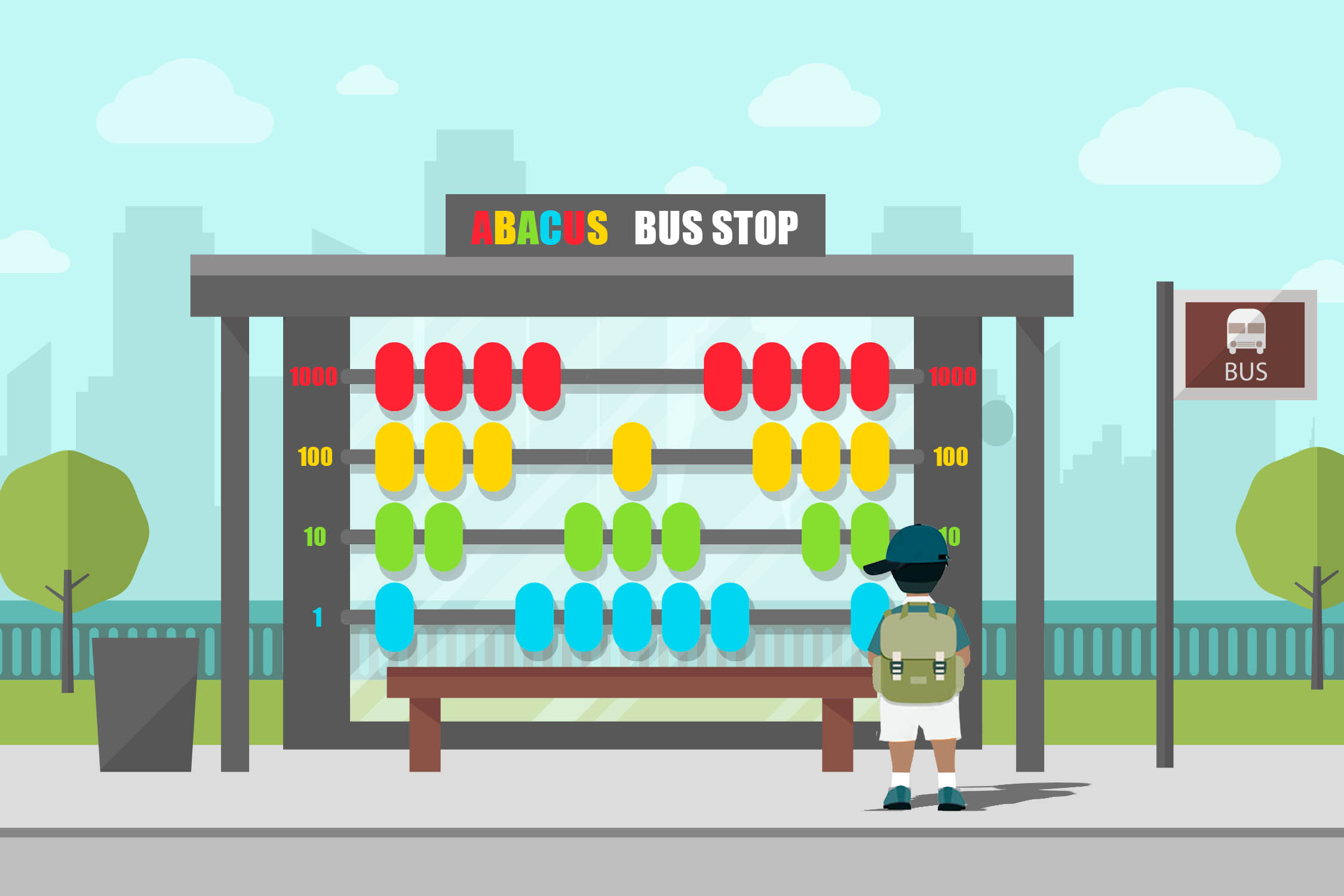
As part of the Playful Learning initiative in Santa Ana, CA, the Abacus Bus Stop reimagines a neighborhood transit stop as a hands-on math learning environment. Designed to activate wait time, the installation integrates a large, interactive abacus directly into the structure, inviting children and caregivers to engage with numbers through touch and movement.
By sliding beads to count, group, compare quantities, and explore patterns, families experience foundational math concepts in a tangible and visual way. The installation encourages back-and-forth conversation, problem-solving, and collaborative play, turning an everyday transit space into an opportunity for shared mathematical exploration woven into daily routines.
The Learning Goals
The Abacus Bus Stop strengthens content knowledge by helping children develop an understanding of counting, grouping, place value, and pattern recognition through hands-on interaction with the beads. As families slide and organize quantities, they build foundational number sense in a concrete, visual way.
It also supports critical thinking by encouraging children to compare amounts, solve simple number challenges, and explain their reasoning during shared exploration, deepening mathematical understanding through conversation and collaboration.
The Team
The Abacus Bus Stop was created through a collaboration between the City of Santa Ana, University of California, Irvine, Northgate Market, Santa Ana Early Learning Initiative, Temple University, and Playful Learning Landscapes.
Supporters
The Abacus Bus Stop project was generously supported by the National Science Foundation through the Advancing Informal STEM Learning (AISL) program.