A playful learning plaza celebrating Chinatown’s culture, language, and community.
Chinatown PlayZa
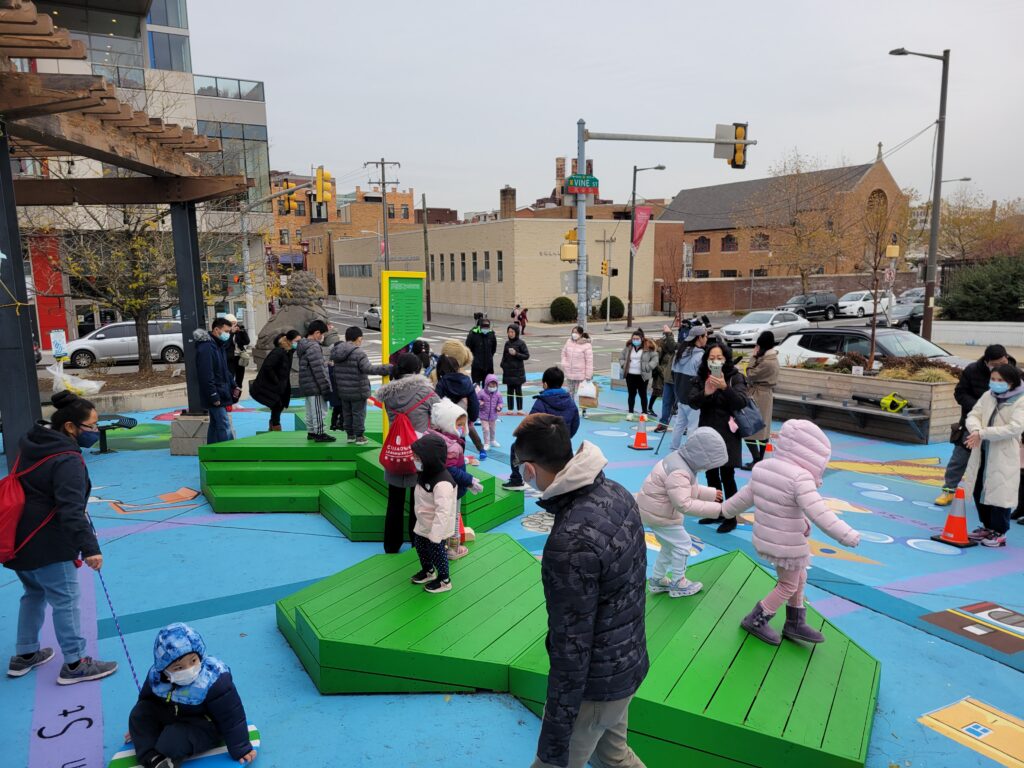
Chinatown PlayZa transforms Philadelphia’s 10th Street Plaza into a welcoming space for literacy, active play, and cultural connection. Located in the heart of Chinatown, the plaza connects the Chinatown business corridor with residential Chinatown and serves as one of the neighborhood’s few outdoor gathering spaces for children and families. The project builds on the colorful koi fish and lily pad mural by artist Chenlin Cai, which helped transform the plaza from a concrete traffic island into a livelier and more playful place.
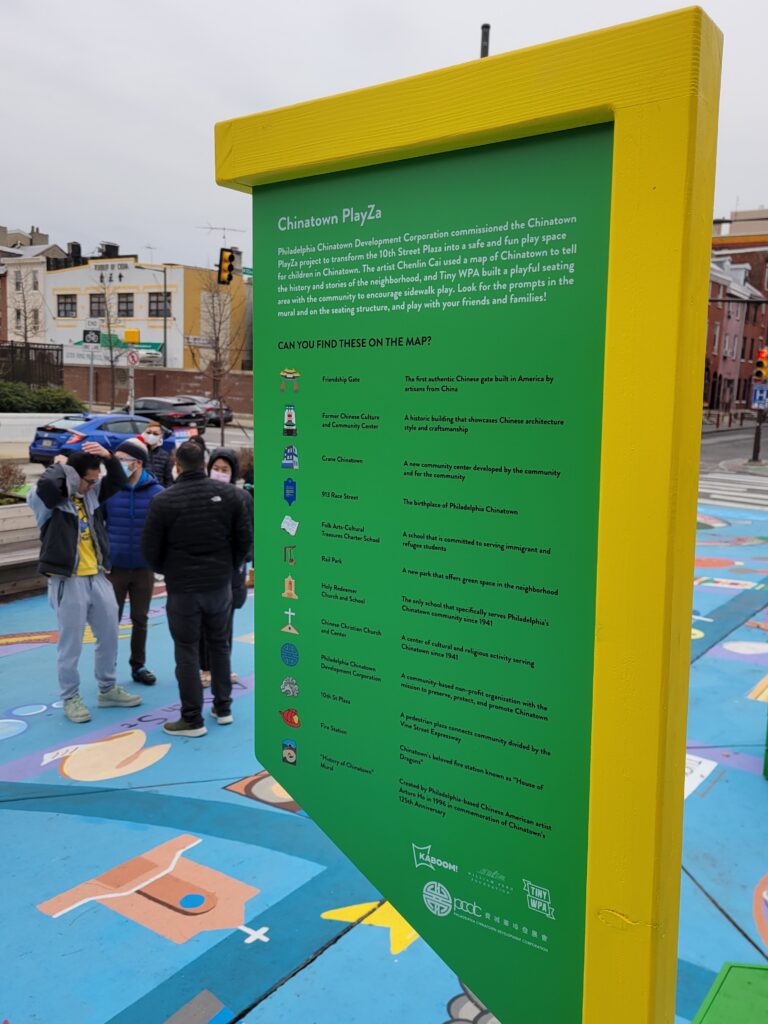
Created in partnership with the Philadelphia Chinatown Development Corporation, Chinatown PlayZa brings playful learning into an everyday neighborhood space. The installation includes an illustrated map of Chinatown, games, and interactive learning murals, with English, Mandarin, and Cantonese translations. Together, these elements invite children and caregivers to move, talk, explore local landmarks, and celebrate the culture and history of Chinatown.
The Learning Goals
Chinatown PlayZa supports the 6Cs of playful learning: collaboration, communication, content, and confidence. Children and caregivers are invited to explore Chinatown through movement, language, storytelling, and play. The multilingual design supports communication across generations, especially in families where children and caregivers may speak different languages. The map and murals also build content knowledge by highlighting Chinatown landmarks, schools, daycare centers, and beloved businesses.
The Team
Chinatown PlayZa was created through a partnership with Philadelphia Chinatown Development Corporation, KABOOM!, Playful Learning Landscapes, the Community Design Collaborative, and the Chinatown community. The project builds on artwork by Chenlin Cai and incorporates ideas shaped by community engagement with local children and families.
Supporters
Chinatown PlayZa was supported through Play Everywhere Philly, a citywide initiative led by KABOOM! with support from the William Penn Foundation.